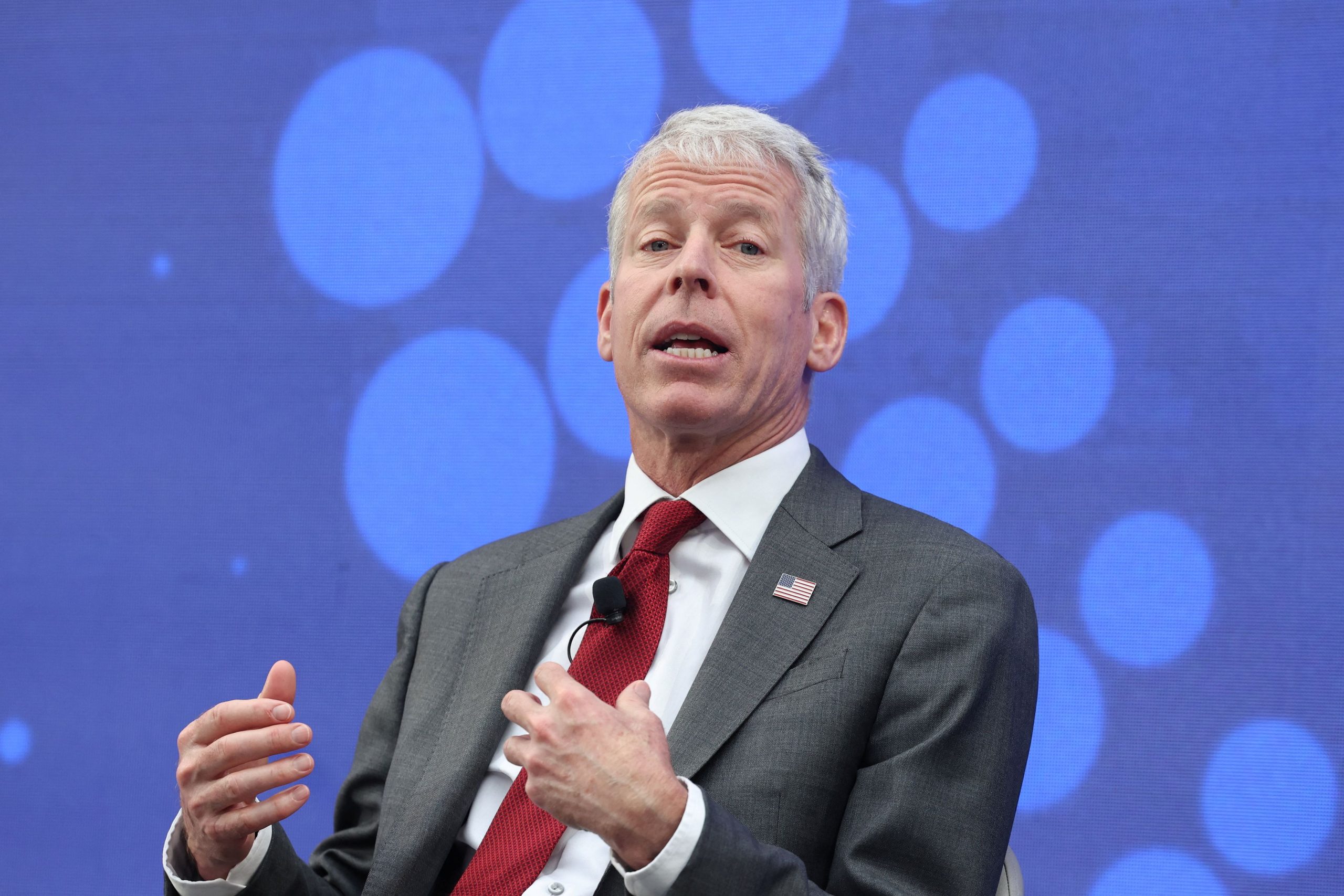
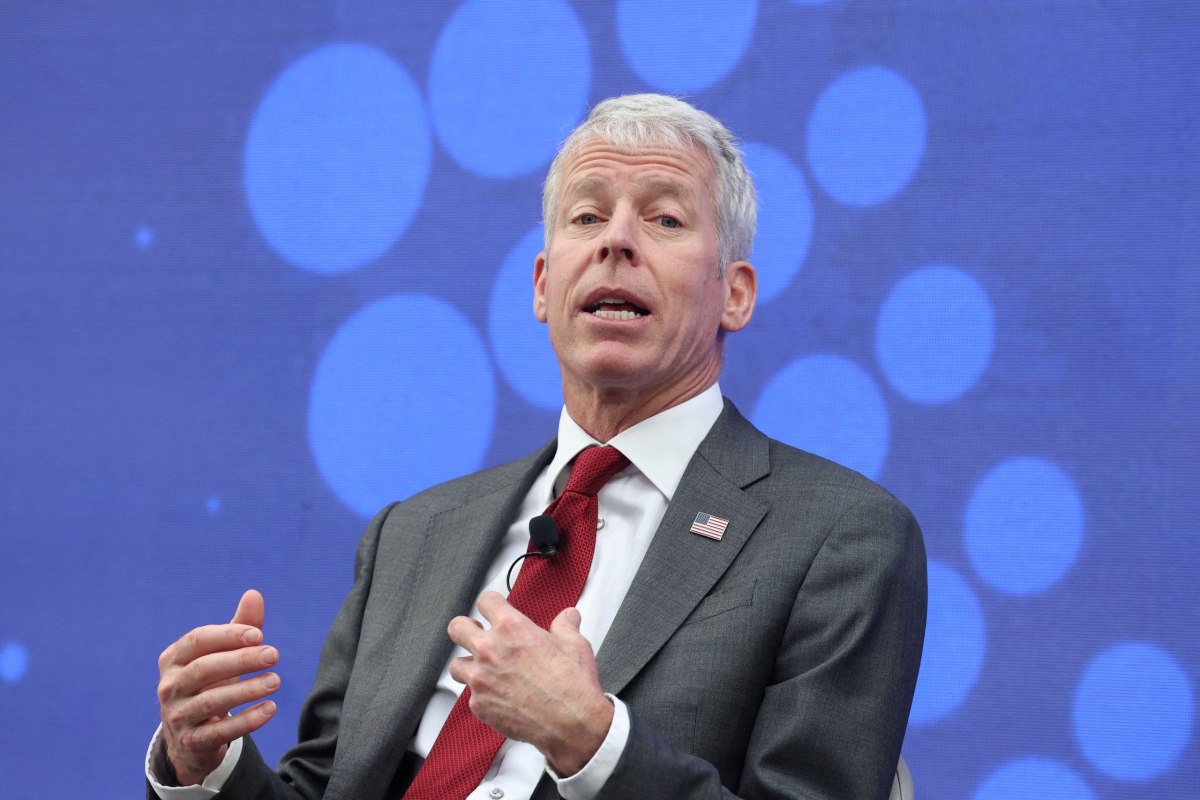
Interview with Chris Wright “Development of Energy tends to make better neighbors”
The US Secretary of Energy emphasizes in “NEA Weekend” that “Greece’s role in the Eastern Mediterranean is critical” and sends his own message to Turkey
With a clear message to Turkey, which he essentially calls on not to stand in the way of energy projects of American interests in Greece, and the expectation that our country will become an energy producer in addition to an energy gateway for the Southeastern European region, the US Secretary of Energy, Chris Wright, gives – through his exclusive interview in “NEA Weekend” – his own mark for his presence at the Partnership for Transatlantic Energy Cooperation conference held in Athens. Having “anointed” Greece as a strategic energy partner of the US and following a series of important agreements announced within the framework of P-TEC with the US administration, the private financial sector and US energy giants, the US Secretary emphasizes the prospects of the “3+1” cooperation format (Greece, Cyprus, Israel and the US), while also announcing the creation of an Eastern Mediterranean Energy Center based in the US, expressing the certainty that “energy development makes better neighbors”.
How far can the “3 + 1” format for energy go?
I think very far. You know, there’s fantastic energy resources in the Eastern Mediterranean, and to build infrastructure pipelines or transmission lines, I think it can become a big deal.I think it’s great economically for this region. I think it’s great for national security for the region. During the meeting we held on Thursday in Athens on the margins of P – TEC with the ministers of Energy of Greece, Cyprus and Israel, we talked about ideas. I think we’re going to set up an Eastern Mediterranean Energy Center somewhere in United States -maybe in an American University – that will look carefully at maybe which projects are most beneficial to the three nations and to the Eastern Mediterranean in general. But there’s offshore oil and natural gas resources, I believe, in all three of the countries. And, so, some kind of pipeline, electric transmission line connections, is one possible idea. Certainly cooperation, learnings from each country on energy development in their various countries. And if you tie energy systems together, you tie people together, and you tie economies together. So I think the benefits become more than just in energy.
What do you see as Greece’s role in the Eastern Mediterranean region?
I think it’s critical. Greece is historically and today a major shipping nation. It’s a port, it’s a trading center. Before, when you had an energy supply system dominated by Russia, Greece was at the end of one of the tentacles. Now, Greece is the entry point. It’s the gateway to Europe for AmericanLNG coming in, and may ultimately be for gas coming from other places besides America. It could be from greek waters or from other of the three nations in the Eastern Mediterranean. So I hope Greece becomes an energy producer in addition to an energy gateway for this region of Southeast Europe.
How do you comment on the level of relations between Greece and the United States?
I think it’s in a great place. We have leaders of both nations that are common sense. They’re pro-energy, they’re pro-economic development. So you have a meeting of the minds on the big issues. I think that opens up great room for cooperation. American businesses investing in Greece, political leaders from the United States here today, and I’m sure we’ll have Greek political leaders in the United States, but I think it’s the start of a strong partnership.
Will Chevron’s explorations in the blocks south of Greece proceed in the near future?
I know we have Exxon moving forward to drill a well in the Exxon blocks. I don’t know Chevron’splans, but if you look at Chevron’s track record, they were the finder of the great natural gas resources offshore Israel. So I think you have the two biggest American oil and gas companies that tells you something, that the chance of success is probably pretty good because you’ve got two sophisticated American companies here. I don’t know the timing of Chevron, but it’ll be exciting as that moves forward.
Do you think that any involvement with Turkey could stand in the way of major energy projects of American interests in Greece moving forward?
I hope not. President Trump’s agenda, prosperity at home and peace abroad, and we believe that developing energy is better for local citizens, lowers costs, expands business opportunities, and development of energy also tends to make better neighbors. So we hope the same thing happens with the Eastern Med in Turkey as resources get developed.
What are your impressions so far from your visit in Greece for the P – TEC?
Thrilled to be here, to meet the leadership of Greece, to spend some time with the wonderful people of Greece, and to be inspired by the history of Greece, particularly classical Athens, and that history is just fantastic. Dinner on Thursday night overlooking the Parthenon and the broader Acropolis was inspiring. I came here with my wife 29 years ago to visit the sites of Greece, both in Athens, in the Peloponnese, and in the islands. So no, I’m a big fan of classical Greece history. And as I gave it a toast, both of our nations were formed by battles for independence from colonial powers. And I drew the parallels on Thursday night in a toast I made between Pericles’ funeral oration and President Abraham Lincoln’s Gettysburg Address. We share a belief, a cherishment of the fight for freedom. And freedom isn’t free. Sometimes the costs are high, but you got to be willing to pay the price to reap the benefits.
Ο τρομπετίστας Ανδρέας Πολυζωγόπουλος, προσκαλεί τον Ολλανδό πιανίστα Diederik Wissels και την Πορτογαλίδα ερμηνεύτρια Ana Rocha για μια ξεχωριστή συνάντηση στη σκηνή του Half Note Jazz Club.
Μετά τη θερμή ανταπόκριση του κοινού από την πρώτη παρουσίαση στο Θέατρο Γκλόρια την άνοιξη του 2024, η παράσταση «Αλιγάτορες» επέστρεψε πιο επίκαιρη από ποτέ και μπαίνει στις τελευταίες παραστάσεις.
Σύνταξη
WIDGET ΡΟΗΣ ΕΙΔΗΣΕΩΝΗ ροή ειδήσεων του in.gr στο site σας








![Άκρως Ζωδιακό: Τα Do’s και Don’ts στα ζώδια σήμερα [Πέμπτη 12.03.2026]](https://www.in.gr/wp-content/uploads/2026/03/maximilien-t-scharner-GExOn1lUED0-unsplash-315x220.jpg)











































 Αριθμός Πιστοποίησης Μ.Η.Τ.232442