OECD: Greek Inflation to Hit 4.2%, Growth Cut to 1.9%
The Paris-based organization points to the energy price shock from the Middle East conflict, warning that Greece’s heavy reliance on imported fossil fuels leaves its economy exposed just as Recovery Fund investment begins to wind down
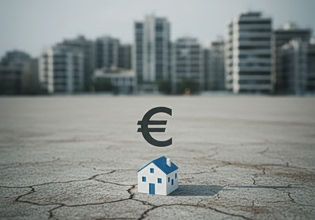
The OECD has revised its economic outlook for Greece, raising its 2026 inflation forecast nearly twofold and trimming its growth projection, as the Middle East conflict drives energy costs higher across the economy.
In its latest Economic Outlook, released on June 3, the Paris-based organization projects headline inflation at 4.2% for 2026, up from its previous estimate of 2.2%, before easing to 2.6% in 2027. GDP growth is forecast at 1.9% this year, revised down from 2.2%, and is projected to reach 2.0% in 2027. The economy grew by 2.1% in 2025, driven by investment, private consumption and net exports.
The OECD attributes the deterioration primarily to the energy price shock triggered by the conflict in the Middle East. Greece imports 93% of its total energy supply, predominantly oil and natural gas, making its external position acutely vulnerable to disruptions in international energy markets. Wholesale electricity prices rose 16% between February and April 2026. The partial closure of the Strait of Hormuz, the critical waterway linking the Persian Gulf to global energy markets, has affected both Greece’s energy imports and its services exports.
Investment slowdown after Recovery Fund
A key concern flagged in the report is the trajectory of investment once EU Recovery and Resilience Fund disbursements begin to wind down. Greece’s Recovery and Resilience Fund, known domestically as “Greece 2.0,” channels EU grants and loans into infrastructure, green transition, and digital transformation projects. Gross fixed capital formation growth is projected to slow from 8.9% in 2025 to 7.1% in 2026 and further to 3.2% in 2027, as the phase-out of Recovery and Resilience funds takes effect.
Fund disbursements are expected to rise from 2.6% of GDP in 2025 to 4.4% of GDP in 2026 before being phased out. Delays in the absorption of EU funds, or prolonged disruptions to energy markets, could weigh on growth prospects.
Tourism growth has remained strong, with international tourist arrivals expanding further and booking rates remaining broadly stable in early 2026. A stronger-than-expected tourism season could boost growth. Exports more broadly are projected to pick up in the second half of 2026 as international demand improves.
The current account deficit is projected to widen to 6.7% of GDP in 2026 from 5.8% in 2025, before narrowing to 6.0% in 2027.
Risks to growth are balanced, the OECD says, provided energy output and exports in the Middle East gradually recover from the second half of 2026 onward, as the organization assumes in its baseline projections.
Fiscal surpluses and debt reduction
Greece’s fiscal position continues to generate sizeable primary surpluses. The OECD projects surpluses of 2.6% of GDP in 2026 and 2.7% in 2027, following a historically high surplus of 4.4% of GDP in 2025, with an assumed tightening of the fiscal stance of 0.4% of GDP between 2025 and 2027. Public debt is projected to decline to 129.8% of GDP by 2027.
New fiscal measures amounting to 0.8% of GDP in 2026 and 1.0% in 2027 mostly reflect a personal income tax reform for employees, pensioners, farmers, the self-employed, and families, as well as increased spending on defense and security. Defense spending will rise by 0.2% of GDP from 2025 to 2026.
Temporary energy support measures introduced in March 2026 include untargeted price subsidies for diesel, targeted road fuel subsidies, and income support for low-income households. These are projected to last until September 2026. The OECD recommends they be phased out rapidly as price pressures ease. Minimum wage increases in 2027 will support household incomes further.
Shipping in the crosscurrents
Greek shipowners control approximately 20% of global shipping tonnage, mostly bulk carriers and oil tankers. Past disruptions of this kind have led to increased demand for shipping services. At the same time, the current Hormuz disruptions are weighing on services exports.
High-frequency indicators continued to point toward expansion in early 2026, but confidence indicators deteriorated in April, notably among consumers and in industry. The unemployment rate declined in 2025 but picked up in the first months of 2026. Labor market tightness remains high, especially in construction, notwithstanding signs of easing in other sectors. Annual private sector credit growth stood at 7.6% in March 2026, underpinned by robust credit expansion to non-financial corporates and a continued recovery in household lending.
Inflation increased to 4.6% in April 2026, driven by rising energy prices and persistent food and services inflation. Real wage growth remained resilient, while the minimum wage increased by 4.5% in April 2026.
Structural priorities
The OECD calls on Greece to keep public debt on a rapidly declining path, given the still high debt level and spending pressures from population aging and climate change. Limiting tax expenditures and continuing efforts to fight tax evasion would create additional fiscal space to strengthen spending on education and healthcare. Strong and sustainable growth, the report notes, will be needed to raise living standards while reducing debt.
On the structural side, the organization recommends continuing efforts to streamline business regulations, ease restrictions on professional services, and rebalance labor market policies toward high-quality training and counseling. These steps would strengthen competition and investment, improve labor productivity, and reduce skills mismatches.
Greece has made significant progress in scaling up renewable energy generation capacity, the OECD acknowledges, but reliance on fossil fuels remains high, especially in transport and housing. Further simplifying and streamlining permitting and licensing procedures for renewable energy investments would help accelerate emission cuts and strengthen energy security. Additional targeted financial support for energy renovations and electric vehicles would also support the phase-out of fossil fuels in the transport and housing sector.
Σύμφωνα με νέα έρευνα, οι πολεμικές τέχνες δεν αποτελούν απλά μια μορφή φυσικής δραστηριότητας, αλλά μια σύνθετη πρακτική που συνδυάζει κίνηση, συγκέντρωση, αναπνοή και κοινωνική αλληλεπίδραση



![Μυστήριο στη Νέα Υόρκη: Ομάδες ανθρώπων καταγράφονται να μπαινοβγαίνουν στους υπονόμους [βίντεο]](https://www.in.gr/wp-content/uploads/2026/06/Sans-titre-1-150x85.jpg)



![Άκρως Ζωδιακό: Τα Do’s και Don’ts στα ζώδια σήμερα [Τετάρτη 03.06.2026]](https://www.in.gr/wp-content/uploads/2026/06/pexels-benjaminfarren-11727472-1-315x220.jpg)




























![Μυστήριο στη Νέα Υόρκη: Ομάδες ανθρώπων καταγράφονται να μπαινοβγαίνουν στους υπονόμους [βίντεο]](https://www.in.gr/wp-content/uploads/2026/06/Sans-titre-1-315x220.jpg)






























 Αριθμός Πιστοποίησης Μ.Η.Τ.232442