Ankara knows all too well that it will not suffer sanctions from the EU, due to Berlin’s stance on the migration problem, or from the US, due to Turkey’s important geostrategic position.
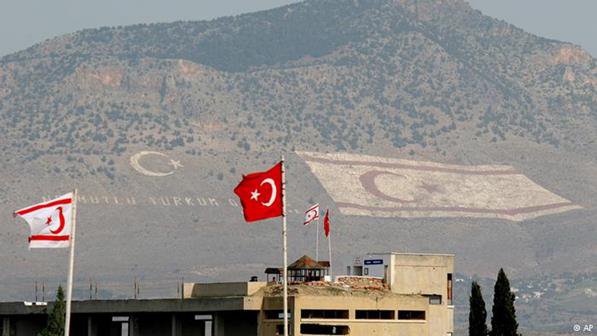
Exactly 47 years after Turkey’s first invasion of Cyprus, Ankara for the 20 July anniversary is planning a second “invasion”, not military this time but by dispatching a huge contingent comprised of Turkey’s governmental, military, and party leadership, headed by President Recep Tayyip Erdogan.
Erdogan’s objective, beyond reaffirming his position in favour of a de jure partition of the island through the creation of two sovereign states, is to announce the next steps in his plan to re-open the Turkish-occupied ghost city Varosha.
The backdrop for all this is a nationalist-religious celebration that will combine the religious Qurban Bayram religious feast with the founding of a Turkish base for drones!
Undoubtedly, such grandiose spectacles may impress the Turkish people, as the population is writhing from the country’s economic crisis.
However, they also demonstrate that Turkey is flagrantly flouting UN resolutions calling for a bi-zonal, bi-communal federation, even as it completely disregards the negative reactions of the Americans and Europeans.
That is because Ankara knows all too well that it will not suffer sanctions from the EU, due to Berlin’s stance on the migration problem, or from the US, due to Turkey’s important geostrategic position.
Moreover, it is now offering its services to the Americans with the proposal that it assume responsibility for the security of the airport of Kabul, after the withdrawal of US troops.
That is why, despite repeated threats from Washington, the US has not imposed sanctions on Turkey over its procurement of Russian S-400 missile systems.
It is also important to understand that Turkey’s push for a two-state solution is linked not so much to the Cyprus problem (which cannot be solved in that manner) but rather with Turkey’s need to strengthen its position in the southeastern Mediterranean, because it feels isolated after the trilateral regional collaborations that Greece has established.
In brief, it is all about the divvying up of regional energy deposits. Turkey fears that despite the fact that it has the longest coastal line in the region, it will be excluded from the distribution.
Meanwhile, all energy planning has frozen due to the drop in petrol prices and amid doubts about whether existing deposits are commercially exploitable.
Essentially, there is much ado about nothing. Here, Greek Cypriots bear great responsibility, because over the years they rejected all compromise proposals tabled to solve the Cyprus problem, most importantly in 2004 with the UN’s Annan Plan.
Στις 10 Μαΐου, το jazz trio των Camila Nebbia, Gonçalo Almeida και Sylvain Darrifourcq καταλαμβάνει τη σκηνή του θεάτρου Baumstrasse, ως «ζέσταμα» για τα φετινά Φ Hill Sessions






![Άκρως Ζωδιακό: Τα Do’s και Don’ts στα ζώδια σήμερα [Τρίτη 07.04.2026]](https://www.in.gr/wp-content/uploads/2026/04/patrick-boucher-70pm04yEWTA-unsplash-1-315x220.jpg)




















































 Αριθμός Πιστοποίησης Μ.Η.Τ.232442