The absence of a Greek-Turkish dialogue is a bad policy that is accompanied by fatalism and introversion, which could prove exceptionally harmful for Greek interests.
The truth be told, what Athens views as “Turkish provocations” are nothing more than an expression of positions that Ankara has maintained for decades.
Greece must reconcile itself with this posture, which will most likely continue into the future.
However, that does not mean that Greek governments should not actively and exhaustively pursue an improvement in bilateral relations, aimed at building good neighbourly relations through constant dialogue at every level.
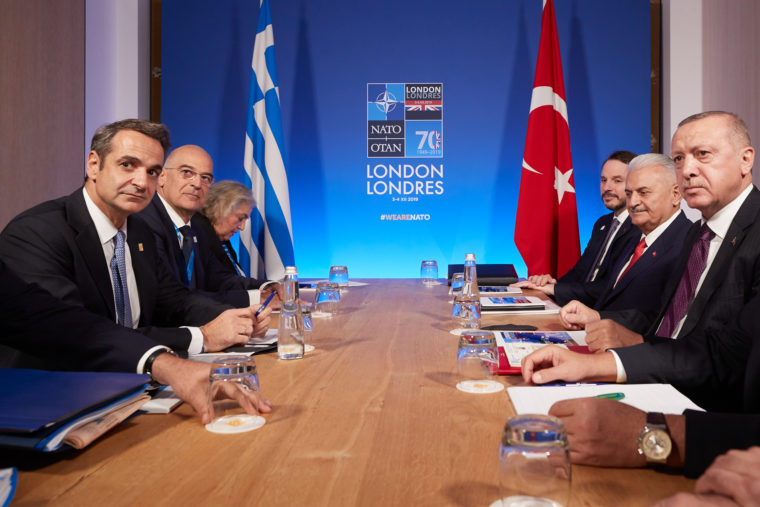
The contact between Defence Minister Nikos Panagiotopoulos with his Turkish counterpart Hulusi Akar – even as bilateral talks on confidence-building measures have resumed and amidst preparations for the 12-13 February Nato foreign ministers’ meeting in Brussels and the Munich Security Conference – is from that perspective absolutely positive.
Turkish policy – or “provocative behaviour” as Athens terms it – should under no circumstances act as a hindrance in pursuing that objective.
The absence of dialogue is a bad policy that is accompanied by fatalism and introversion, which could prove exceptionally harmful for Greek interests.
Dialogue must continue to be a basic pillar of Greek foreign policy.
Naturally, not all Turkish demands will be discussed and a dialogue will always have its limits, but without it there is a greater chance of things going beyond the pale.
Στις 10 Μαΐου, το jazz trio των Camila Nebbia, Gonçalo Almeida και Sylvain Darrifourcq καταλαμβάνει τη σκηνή του θεάτρου Baumstrasse, ως «ζέσταμα» για τα φετινά Φ Hill Sessions








![Άκρως Ζωδιακό: Τα Do’s και Don’ts στα ζώδια σήμερα [Δευτέρα 06.04.2026]](https://www.in.gr/wp-content/uploads/2026/04/aziz-acharki-jJbMgASm6l4-unsplash-315x220.jpg)

































































 Αριθμός Πιστοποίησης Μ.Η.Τ.232442