
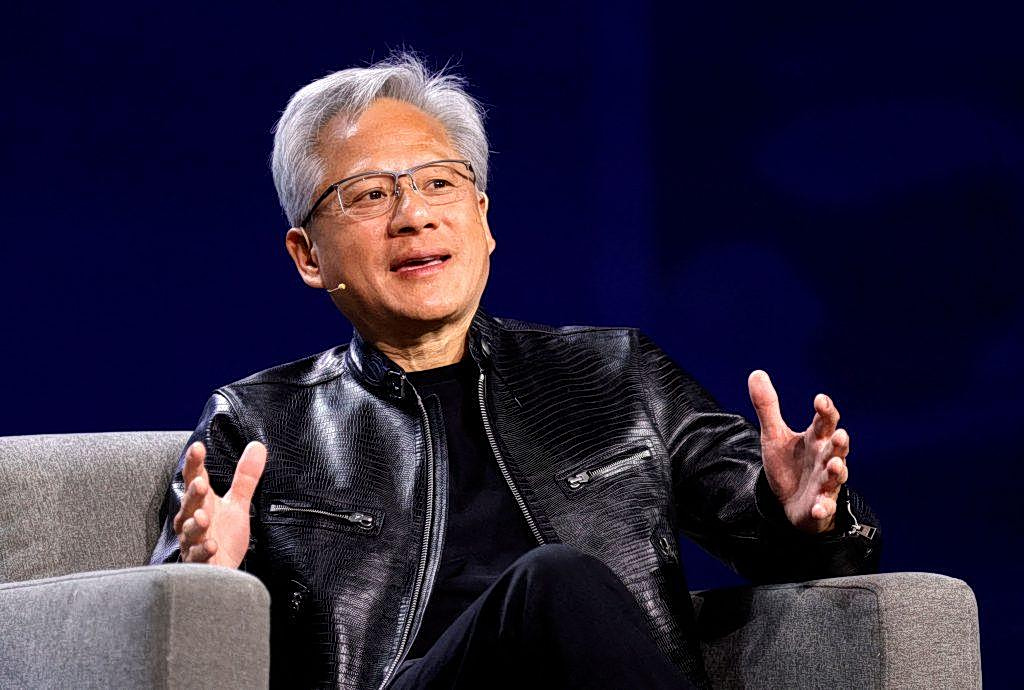
Jensen Huang Dominates Computex with AI and New Chip Push
Nvidia’s CEO took the Computex stage in Taipei to declare the dawn of agentic AI, unveiling the Vera Rubin platform and the RTX Spark chip for a new generation of Windows PCs





Jensen Huang returned to Taipei for Computex 2026, delivering what has become one of the most anticipated keynotes in the tech calendar and cementing Nvidia’s role as the defining force in artificial intelligence hardware.
Speaking at the Taipei Music Center on June 1, Huang argued that AI has crossed into a fundamentally new phase. The chatbot era — where users ask questions and get answers — is over, he said. What comes next is agentic AI: systems capable of setting goals, breaking tasks into steps, calling on tools, and following through autonomously. Nearly every product Nvidia announced at the event is built around this shift.
The Vera Rubin Platform
The centerpiece of the enterprise portion of the keynote was the Vera Rubin AI computing platform, which Huang confirmed is now in full production. The system is staggering in scale: seven custom chips, six trillion transistors, more than 18,000 components on a single board, and upward of 1.3 million components in total. Huang also introduced the Vera CPU, which he described as the first processor designed specifically for a world where billions of AI agents are working alongside humans, rather than for human users directly.
The Vera CPU delivers roughly 1.8 times the performance of x86 processors on relevant workloads and runs SQL queries around three times faster. Among its first confirmed customers are Anthropic, OpenAI, and SpaceX. Huang was emphatic that the system was not built simply to run AI models — it was built to run agents.
RTX Spark: Reinventing the PC
The consumer highlight of the evening was the unveiling of RTX Spark, a new Windows on Arm superchip co-developed with MediaTek. Huang declared that 40 years of traditional PC interaction — mouse, keyboard, and discrete inputs — is coming to an end, and that RTX Spark represents the foundation of what he called the next era of personal computing.
The high-end version of the chip packs 20 CPU cores and 6,144 CUDA cores based on Blackwell architecture, delivers around 200 TOPS of on-device AI performance, and supports up to 128GB of unified memory — specs designed to take on Apple’s M5 Pro and M5 Max. Because the chip handles AI tasks locally rather than routing requests to a cloud server, it sidesteps one of the biggest frustrations with current AI-powered laptops. Nvidia also noted that RTX Spark systems will not support a discrete GPU, making clear that agentic AI capability, not high-end gaming, is the primary target.
Dell, ASUS, and Lenovo are among the manufacturers planning to release RTX Spark-powered Windows PCs, with laptops expected to arrive in the fall. Adobe has also committed to rebuilding Photoshop and Premiere Pro to take advantage of the chip’s architecture. Huang outlined a multi-generation roadmap for the platform: Vera Rubin Spark in 2028 and Rosa Feynman Spark in 2030.
Robotics and New AI Models
Huang also covered Nvidia’s robotics ambitions, announcing Cosmos 3, a new world foundation model for physical AI and autonomous systems. He outlined the path from teleoperation and simulated environments to synthetic data and eventually a full world model — positioning Nvidia as a central player in the robotics and autonomous vehicle sectors.
On the software side, Huang introduced Nemotron 3 Ultra and Alpamayo 2 as new AI models, and pushed back against concerns about AI eliminating jobs, arguing that demand for software engineers is actually rising as a direct result of the growth in AI agents.
Taiwan Front and Center
Taiwan occupied a prominent place in the keynote, as it has in recent years, reflecting Nvidia’s deep dependence on the island’s manufacturing ecosystem. Huang acknowledged key partners including TSMC and Foxconn, and confirmed that construction is set to begin on Nvidia’s local Constellation campus. He predicted that the Taiwan supply chain will only grow in strategic importance as Nvidia scales production.
- Κομισιόν: Βάζει ξανά στο «μικροσκόπιό» της, την ελληνική οικονομία
- Κάρπαθος: Σε καθεστώς έκτακτης ανάγκης λόγω λειψυδρίας το νησί
- Ο Στεφ Κάρι ανακοίνωσε συμφωνία-μαμούθ με κινεζική αθλητική εταιρεία (vid)
- Οι Αθώοι: Φινάλε με πρωτιά στην τηλεθέαση
- Γερμανία: Ένοπλος ταμπουρώθηκε σε μπαρ στο Ρέντσμπουργκ του Σλέσβιγκ-Χολστάιν – Μεγάλη αστυνομική επιχείρηση
- Νέα Αριστερά: Η αποχώρηση στελεχών και βουλευτών συνδέεται με την ίδρυση της ΕΛΑΣ – Συνεχίζουμε
- Η «γραμμή της κόλασης» επιστρέφει: Το viral λεωφορείο 666 ξανά στους δρόμους της Πολωνίας
- ΕΛΑΣ για Ντίλιαν: Ο Μητσοτάκης δεν μπορεί να κρύβεται


Ακολουθήστε το in.gr στο Google News και μάθετε πρώτοι όλες τις ειδήσεις
![Άκρως Ζωδιακό: Τα Do’s και Don’ts στα ζώδια σήμερα [Τρίτη 02.06.2026]](https://www.in.gr/wp-content/uploads/2026/06/pexels-chetan-jawale-65299-12024049-1-315x220.jpg)






































































 Αριθμός Πιστοποίησης Μ.Η.Τ.232442