
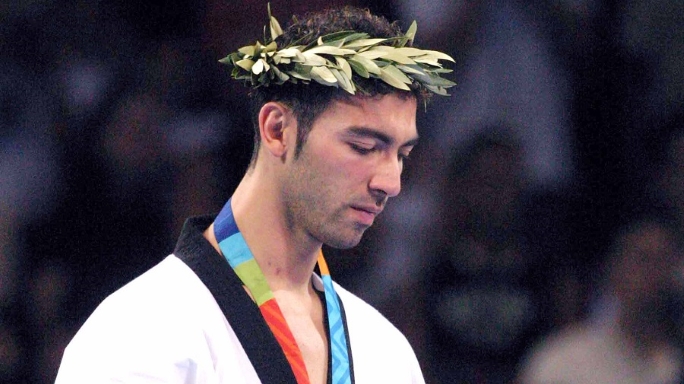
Editorial Ta Nea: A farewell with sorrow and pride
Alexandros Nikolaidis felt grateful for the “gold medal” of the two-year extension of his life, because his five-year-old daughter will be able to remember him “even as a distant memory” and tell her little brother.





Everything around us is dark and gloomy.
Russian bombings continue to kill innocent people in Ukraine.
The coming winter will be harsh.
The danger of a Greek-Turkish military clash or accident in the Aegean persists, and every so often Greek society has been rocked by yet another heinous crime.
One child is sexually abused in Greece every day, and that is hard for the human mind to fathom.
Suddenly, from this bleak terrain, a hope pops up, not due to a happy event, but because of a human tragedy, not from a birth, but from a death.
The message that two-time Taekwondo Olympic silver medalist Alexandros Nikolaidis’ arranged to be posted posthumously on his Facebook wall – after battling a rare form of cancer with a survival rate normally of six to seven months for two years and dying yesterday at age 43 – should be taught at our schools.
That is because he speaks of love without an inkling of melodrama, about self-denial without a shred of hypocrisy, and about solidarity with no distinctions.
Each one of us, in his position, would ask, “Why did this happen to me?”
He, instead, said thank you that it happened to him and not to another member of his family.
Each of us would try to evade such a harsh reality, to escape his or her fate, to fool death.
He looked death in the eye and took care to leave behind the most valuable imprint, the most powerful legacy: to have his two Olympic medals auctioned off and to have his family pick institutions and facilities that care for children.
Most of us would complain that we are leaving this world, whereas the others staying behind.
Alexandros Nikolaidis felt grateful for the “gold medal” of the two-year extension of his lease on life, because his five-year-old daughter will now be able to remember him, “even as a distant memory”, and to tell stories to her younger brother about their father.
“It is I who am shouting, it is I who am crying, can you hear me?”
It was with that line from the poem “Monogramma” (Monogram) by Nobel laureate Odysseas Elytis that Alexandros’ wife bid him farewell.
Yet, she is not the only one crying.
We all are crying, with sorrow over the death of a man still in his youth, and with pride that such a diamond graced our land, albeit for so few years.
- Οι αθλητικές μεταδόσεις της ημέρας (17/4): Πού θα δείτε το σημαντικό ματς του Παναθηναϊκού και τα υπόλοιπα ματς της Euroleague
- ΠΑΣΟΚ: Λόγια του αέρα η ανάληψη ευθύνης από τον Μακάριο Λαζαρίδη – Οφείλει να τον αποπέμψει ο Μητσοτάκης
- Μυστήριο για σοβαρό τραυματισμό 17χρονης στην Κοζάνη – Νοσηλεύεται με κάταγμα κρανίου και ρήξη τυμπάνου
- Η πτώση του Κυριάκου Μητσοτάκη έχει ήδη ξεκινήσει
- Η Χάποελ Τελ Αβίβ πάει για διπλή μεταγραφή με ΛεΝτέι και Χεζόνια…
- Β. Κικίλιας: Εγκρίθηκε το Master Plan του Λιμένα Πατρών – Νέα εποχή για ένα από τα βασικά λιμάνια της χώρας
- Αν οι τοίχοι είχαν στόμα – Μέσα στα δωμάτια των Πάτι Σμιθ και Ρόμπερτ Μέιπλθορπ στο θρυλικό Chelsea Hotel
- Κατάψυξη ωαρίων : μόδα ή εργαλείο;


Ακολουθήστε το in.gr στο Google News και μάθετε πρώτοι όλες τις ειδήσεις
![Άκρως Ζωδιακό: Τα Do’s και Don’ts στα ζώδια σήμερα [Παρασκευή 17.04.2026]](https://www.in.gr/wp-content/uploads/2026/04/theodor-vasile-QgV8nrpQjQ8-unsplash-1-315x220.jpg)


































































 Αριθμός Πιστοποίησης Μ.Η.Τ.232442