
Editorial Ta Nea: Channels
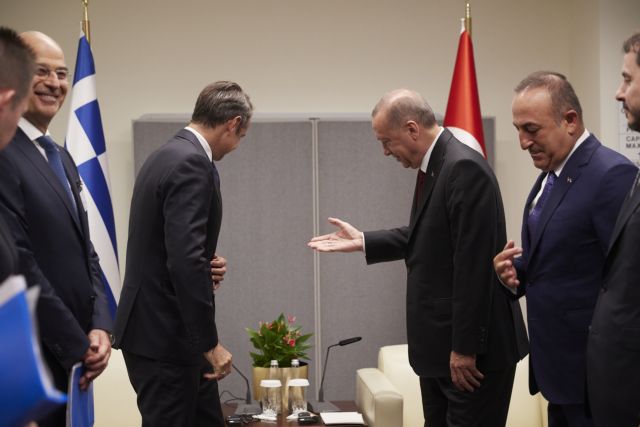
The leader of Turkey loses no opportunity to display his aggressiveness. Yesterday he spoke about grey zones in the Aegean (Greek islands whose sovereignty Ankara disputes) and accused Greece and its allies of trying to block Turkey’s access to the sea. He announced that he will bolster Ankara’s military support for the government of Libya. Athens responds to this intransigence with the Agreement of the Four in which it is joined by Israel, Egypt, and Cyprus for the construction of the EastMed pipeline. Greece is also taking initiatives in the Middle East such as the foreign minister’s trip to Libya and Egypt yesterday. Along with these moves the government must not forget that Turkey will remain our neighbour. Hence, channels of communication must remain open not in order to make bilateral agreements on issues (mainly of sovereignty) that divide the countries and which Athens has always considered non-negotiable, but rather to make it possible for Greece and Turkey to eventually go to the International Court of Justice to resolve issues that the two sides have agreed to in advance. There are many obstacles in such a course. The Greek political class fears the political cost that reviving this issue will have. The Turkish political class, which theoretically does not rule out such an eventuality in fact places so many preconditions that make such a solution prohibitive. That does not mean that diplomacy must resign itself to the current situation and problems. A military clash would be disastrous for both countries. Greece is also taking initiatives in the Middle East such as the foreign minister’s trip to Libya and Egypt yesterday.




The leader of Turkey loses no opportunity to display his aggressiveness.
Yesterday he spoke about grey zones in the Aegean (Greek islands whose sovereignty Ankara disputes) and accused Greece and its allies of trying to block Turkey’s access to the sea.
He announced that he will bolster Ankara’s military support for the government of Libya.
Athens responds to this intransigence with the Agreement of the Four in which it is joined by Israel, Egypt, and Cyprus for the construction of the EastMed pipeline.
The leader of Turkey loses no opportunity to display his aggressiveness.
Yesterday he spoke about grey zones in the Aegean (Greek islands whose sovereignty Ankara disputes) and accused Greece and its allies of trying to block Turkey’s access to the sea.
He announced that he will bolster Ankara’s military support for the government of Libya.
Athens responds to this intransigence with the Agreement of the Four in which it is joined by Israel, Egypt, and Cyprus for the construction of the EastMed pipeline.
Greece is also taking initiatives in the Middle East such as the foreign minister’s trip to Libya and Egypt yesterday.
Along with these moves the government must not forget that Turkey will remain our neighbour.
Hence, channels of communication must remain open not in order to make bilateral agreements on issues (mainly of sovereignty) that divide the countries and which Athens has always considered non-negotiable, but rather to make it possible for Greece and Turkey to eventually go to the International Court of Justice to resolve issues that the two sides have agreed to in advance.
There are many obstacles in such a course. The Greek political class fears the political cost that reviving this issue will have.
The Turkish political class, which theoretically does not rule out such an eventuality in fact places so many preconditions that make such a solution prohibitive.
That does not mean that diplomacy must resign itself to the current situation and problems.
A military clash would be disastrous for both countries.
Along with these moves the government must not forget that Turkey will remain our neighbour.
Hence, channels of communication must remain open not in order to make bilateral agreements on issues (mainly of sovereignty) that divide the countries and which Athens has always considered non-negotiable, but rather to make it possible for Greece and Turkey to eventually go to the International Court of Justice to resolve issues that the two sides have agreed to in advance.
There are many obstacles in such a course. The Greek political class fears the political cost that reviving this issue will have.
The Turkish political class, which theoretically does not rule out such an eventuality in fact places so many preconditions that make such a solution prohibitive.
That does not mean that diplomacy must resign itself to the current situation and problems.
A military clash would be disastrous for both countries.
- «The Invite»: Η νέα δραματική κομεντί με τους Ολίβια Γουάιλντ, Σεθ Ρόγκεν, Πενέλοπε Κρουζ
- Τέσσερις τρόποι για να διαχειριστείς τις παρεξηγήσεις στη σχέση
- Γιατί η Ευρώπη μπορεί ακόμα να βρεθεί αντιμέτωπη με μια κρίση φυσικού αερίου χωρίς να υπάρχει έλλειψη
- Πλησιάζουν «ταβάνι» οι τιμές στα ακίνητα
- Τι καιρό έκανε στην Εξοδο του Μεσολογγίου;
- ΕΦΚΑ: Οδηγός για την πενταετή παραγραφή οφειλών
- Ο 50 Cent αποκτά τη δική του σειρά ντοκιμαντέρ
- Ιράν: «Γιατί η κατάπαυση του πυρός είναι καταδικασμένη»


Ακολουθήστε το in.gr στο Google News και μάθετε πρώτοι όλες τις ειδήσεις
![Άκρως Ζωδιακό: Τα Do’s και Don’ts στα ζώδια σήμερα [Πέμπτη 09.04.2026]](https://www.in.gr/wp-content/uploads/2026/04/evgeni-tcherkasski-6AcF6hcRU8A-unsplash-1-315x220.jpg)










































 Αριθμός Πιστοποίησης Μ.Η.Τ.232442