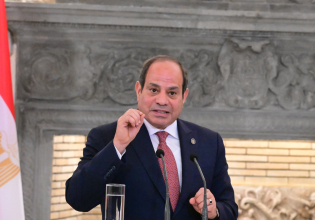
Turkish President Recep Tayyip Erdogan’s electoral victory signals that one should not await significant policy changes.
The truth be told, Erdogan did not escalate his rhetoric on Greek-Turkish affairs during the campaign, yet that does not alter the fact that there are still open issues.
In his victory speech, he noted the upgraded Turkish presence in Syria, signaling that this is the most important geopolitical issue for Turkey.
On the other hand, the fact that his parliamentary majority requires the collaboration of Devlet Bahceli, who leads the par excellence right-wing nationalist movement in Turkey, could lead to aggressive actions. Still, one must not forget that a key characteristic of the new Turkish constitution is that it bolsters the president at the expense of parliament.
Amidst the broader search for the orientation of Turkish foreign policy, one can expect the maintenance of its current direction, which consists of a heightened incredulity and aggressiveness towards whatever is considered to be a prospective threat to or downgrading of Turkey.
In that sense, one cannot expect a de-escalation of rhetoric regarding the Exclusive Economic Zones (EEZ), especially as regards the aim of co-exploitation of Cyprus’ EEZ.
As long as Turkey views these moves as an effort to establish balances that limit Turkey’s perceived rights and its role in regional energy flows, one can expect a continuation of current tensions. The crucial parameter is how other involved powers will react, and primarily the US.
In the same framework, one can expect that Turkey will continue to handle the refugee crisis as leverage, as European countries need to stem refugee flows towards them.
Aegean issues
As regards the Aegean, the electoral period pushed nearly the entire political system towards an aggressive rhetoric on “grey zones” [Greek islands whose sovereignty Turkey disputes].
On the other hand, there are signals that the Turkish side fears the prospect of a clash, perhaps because it could be triggered in order to put Turkey in a tough spot, even though the domestic rise of nationalism would allow an easier handling of such an eventuality.
On the other hand, one should not expect significant changes on the diplomatic pressure and tensions, regarding the eight Turkish military officers who sought asylum in Greece, or regarding the two Greek army officers who remain imprisoned in Turkey.
The aggressive stance towards all those considered to be implicated in the abortive coup against Erdogan is a given in Turkish policy, as demonstrated by waves of arrests domestically.
Also established is the “diplomacy of hostages”, with protracted incarceration of foreign citizens.









![Άκρως Ζωδιακό: Τα Do’s και Don’ts στα ζώδια σήμερα [Δευτέρα 30.03.2026]](https://www.in.gr/wp-content/uploads/2026/03/paul-pastourmatzis-36plOdZK_uY-unsplash-315x220.jpg)




















































 Αριθμός Πιστοποίησης Μ.Η.Τ.232442