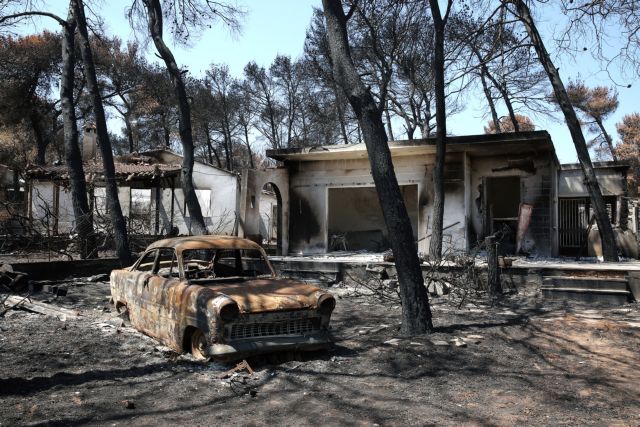
Editorial Ta Nea: Callousness
A state that does not rush to offer relief to citizens who have suffered a tragedy, is neither slow nor bureaucratic. It is simply callous
However, a state that does not rush to offer relief to citizens who have suffered a tragedy, is neither slow nor bureaucratic. It is simply callous.
It is inconceivably callous, because the list of those who died due to the Eastern Attica wildfires is growing.
Precisely that inconceivable callousness is reflected in the fact that the fire-stricken of Eastern Attica cannot reconstruct their homes, even with their own money, because the ministerial decision that sets the terms and preconditions for receiving building permits has not been issued.
That exposes both the state and the government. It also reminds one that the imbecility that was the cause for the loss of human lives is now hindering survivors in their efforts to rebuild their lives.
In a great tragedy, the pain is also collective, as are the mourning and solidarity and care.
The day after a tragedy, however, is lonely, and it can prove incredibly harsh if the organised state does not do what is necessary in order to continue to stand by the victims.
Governmental responsibility on this score is enormous, as it is de facto impossible for the victims to adjust to the slow pace of the state.
It is morally necessary for the government to adjust to the needs of the victims.
- Ιράν: Επίθεση των ΗΠΑ στο νησί Κεσμ – «Συντριπτική» ιρανική απάντηση σε αμερικανική βάση στο Κουβέιτ
- Η ΕΕ επανεξετάζει το μέλλον των Ουκρανών προσφύγων, ενώ ορισμένα κράτη μέλη σκληραίνουν τη στάση τους
- Βρετανία: Επεισόδια για τη σύλληψη ετοιμοθάνατου φοιτητή-θύματος επίθεσης
- Γερμανία: Ανδρας κρατά ομήρους 2 παιδιά – Μεγάλη αστυνομική επιχείρηση στο Ντόρτμουντ
- Στα «ΝΕΑ» της Τετάρτης: Μύρισε εκλογές
- Λαζόπουλος για την παρακολούθησή του με Predator: Oι ιδιώτες ήθελαν να μάθουν αν θα ζήσω ή αν θα πεθάνω;