Turkish hackers claim they attacked websites of Greek intelligence, top ministries, ATHEX
With Turkey hosting over three million migrants and refugees from Syria and elsewhere it is using the threat of unleashing waves of migrants and refugees toward Europe to blackmail Greece, Germany and the EU more generally.
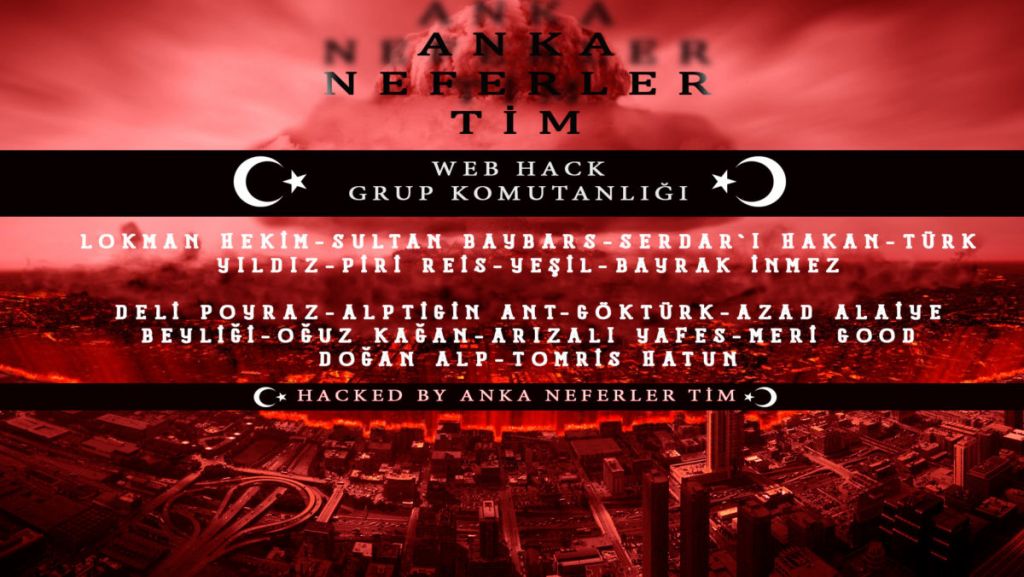
The Greek National Intelligence service was among several top Greek state and government websites that went down on 17 January due to a wholesale cyber attack for which an ultra-nationalist Turkish hackers group with apparently strong neo-Ottoman sympathies named Anka Neferler Tim has claimed responsibility.
Greek authorities proceeded to shut down servers to prevent statements from being posted on the affected websites.
The group took responsibility for the attack in a tweet – Twitter has since shut down the account – in which it lists the targets that were attacked.
“Greece is threatening Turkey in the Aegean and the Eastern Mediterranean. Now it is threatening the [Berlin] conference on Libya. Greece seems to be itching [for a bruising],” the group said in its statement claiming responsibility for the hacking of the following websites:
National Intelligence Service –http://www.nis.gr
Greek Parliament –https://www.hellenicparliament.gr
Greek Ministry of Foreign Affairs-https://www.mfa.gr
Athens Stock Exchange-https://www.athexgroup.gr
Greek e-State-http://www.e-gif.gov.gr
Greek Finance Ministry-https://minfin.gr
Greek authorities confirmed the hacking.
The German tabloid Bild reported that German President Recep Tayyip Erdogan pressured German Chancellor Angela Merkel who is hosting the Berlin Libya peace conference in cooperation with the UN to bar Greece from attending.
With Turkey hosting over three million migrants and refugees from Syria and elsewhere it is using the threat of unleashing waves of migrants and refugees toward Europe to blackmail Greece, Germany and the EU more generally.
Greece is the most vulnerable as the point of first entry into the EU.
Mediterranean-Libyan backdrop
The attacks came amidst heightened Greek-Turkish tensions in the Southeastern Mediterranean and the Aegean and a battle royal between Athens and Ankara over a Libya-Turkey agreement (MOU) to delimit their Exclusive Economic Zones (EEZs) even though they are not contiguous.
The accord is a flagrant violation of the UN’s 1982 Law of the Sea Convention.
The US, EU, France, and Russia, and Egypt are among the major geopolitical players that have rejected the validity of the MOU.
The French government stated said the MOU is null and void.
The map submitted to the UN by the parties expropriates a large chunk of Greece’s maritime zone including the EEZ surrounding the large island of Crete which is considered to be rich in hydrocarbons.
The US State department this week issued a statement debunking Turkey’s specious theory that islands have no EEZ.
There is no indication whether the hackers’ organisation is linked to the Turkish state, which keeps close tabs on the country’s social media.
State Minister Yorgos Gerapetritritis told Open television that, “We are dealing with a coordinated attack. It involves multiple simultaneous access to websites. It is from various points of origin. Strong counter-measures have been taken. The Greek government has prioritised such issues and we are in talks to upgrade the entire infrastructure.”
- Τρομακτικές στιγμές: Κοριτσάκι καταγράφει τη στιγμή που το Ισραήλ άρχισε να βομβαρδίζει τη Βηρυτό
- Ποια είναι η «κρυφή αίσθηση» που έχει ο σκύλος σας και καθορίζει το σώμα του; – Τι είναι η ιδιοδεκτικότητα
- Τα σενάρια για να βρεθούν αντιμέτωποι Ολυμπιακός και Παναθηναϊκός στα playoffs της Euroleague
- ΕΛ.ΑΣ.: Προειδοποίηση για κροτίδες και βεγγαλικά την περίοδο του Πάσχα – «Απαγορεύεται η χρήση τους»
- Κόνι Μεταξά: Ο χωρισμός της έφερε παραπανίσια κιλά – Πόσο έδειξε η ζυγαριά
- Νέα απάτη στο όνομα του e-ΕΦΚΑ – Απατεώνες αποσπούν στοιχεία ασφαλισμένων