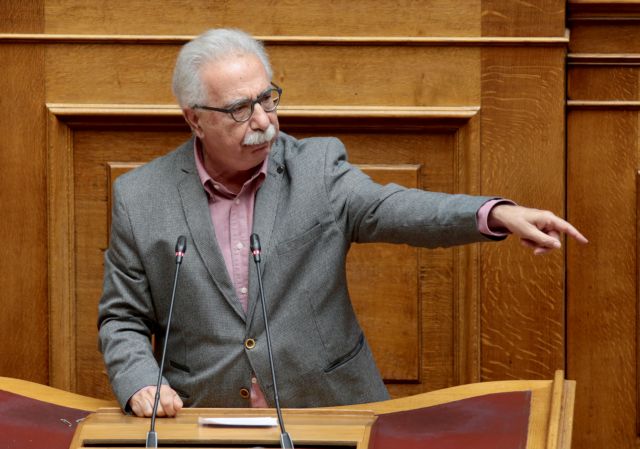
Editorial Ta Nea: Gangrene
It is sad to think that despite the fact that the Education Minister Gavroglu has taught as a university professor in Greece he has learned nothing about the problems that have beset Greek universities.
With the announcement of the second hike in two years in the number of applicants admitted to universities, the education minister has proven that the government is using the tertiary education system for vote-mongering.
It would be no exaggeration to say that now more than ever in the past the education system is being used as a tool of clientelism.
Aside from a rise in the number of applicants admitted to universities, the merger of tertiary technical schools and university faculties will produce an oversupply of engineers who will find it well nigh impossible to find a job in their field of study.
The education minister ignored all that just as he ignored the repeated pleas of rectors for him not to undermine the state university system.
It is sad to think that despite the fact that the minister has taught as a university professor in Greece he has learned nothing about the problems that have beset Greek universities.
He apparently has chosen to remain indifferent about real problems and has decided to dedicate himself to policies that serve only partisan expediency.
The actions of the education minister set a bad example for the future.
Clientelism in education is not only bad policy.
It is a gangrene that infects the entire education system.
- ΟΗΕ – Ορμούζ: Αναβολή χωρίς νέο χρονοδιάγραμμα στο Συμβούλιο Ασφαλείας για το σχέδιο απόφασης του Μπαχρέιν
- Ιράν: Οι κόρες του Κασέμ Σολεϊμανί διαψεύδουν ότι έχουν σχέση με τις γυναίκες που συνελήφθησαν στις ΗΠΑ
- Ο Οικουμενικός Πατριάρχης Βαρθολομαίος και ο Βολοντίμιρ Ζελένσκι συναντήθηκαν στην Κωνσταντινούπολη
- Περίπου 1.500 ναύτες των ΗΠΑ έφυγαν πανικόβλητοι από το Μπαχρέιν – Δεν πήραν ούτε τις στολές τους
- Ακρίβεια: Στα ύψη οι τιμές των καυσίμων – Πόσο θα κοστίσει το Πάσχα στο χωριό
- Λίβανος: Δυο κοριτσάκια σκοτώθηκαν, τουλάχιστον 40 οι τραυματίες από τα ισραηλινά πλήγματα