Trump’s War on Iran Threatens to Drive Up Oil Prices and Inflation
Disruption to the Middle East’s prodigious energy exports could have far-reaching economic consequences
U.S. and Israeli strikes against the Iranian regime and military threaten to upend the global oil market and send shock waves through the world economy.
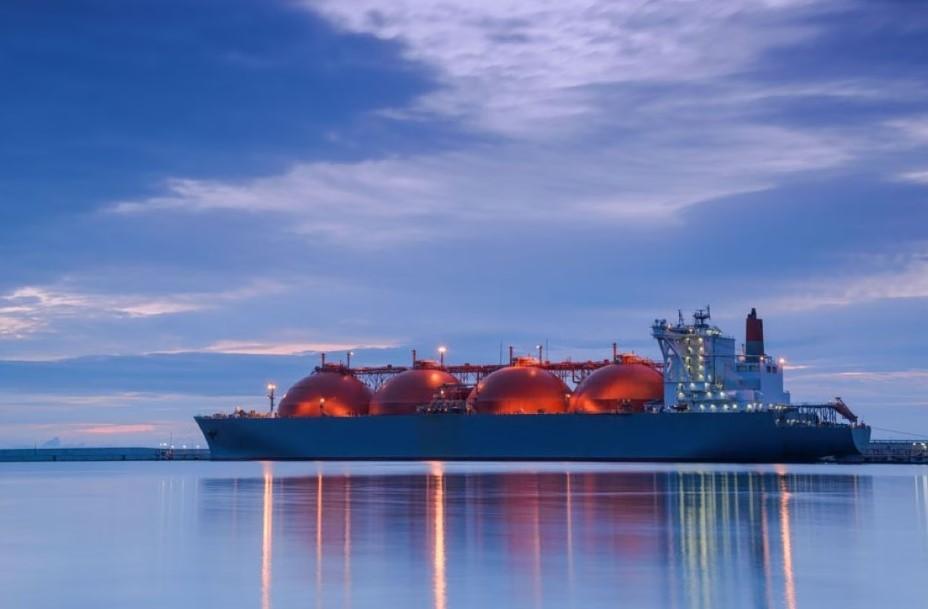
The government of Qatar, one of the world’s biggest exporters of liquefied natural gas, urged shipowners to suspend maritime activities. Dozens of tankers diverted from the Persian Gulf in the early hours of the conflict. The U.S. Navy advised tanker companies to avoid nearby waters because it couldn’t guarantee their safety, according to an alert from an industry body.
President Trump said the U.S. had launched a major combat operation, with far broader objectives than strikes last year that targeted Iranian nuclear sites. The attacks risk sparking a wider regional war and greater economic disruption than the earlier conflict. Iran responded swiftly on Saturday, sending a barrage of missiles at Israel and U.S. military bases throughout the region.
“Implications of this war could be wide because oil is a feedstock for so much of the global economy,” said Edward Fishman , director of the Center for Geoeconomic Studies at the Council on Foreign Relations. “You could see knock-on effects for monetary policy and inflation.”
Oil traders and brokers scrambled to assess the extent of the disruption, including whether traffic could still pass through the Strait of Hormuz , a vital thoroughfare for energy supplies.
Ships on Saturday received Iranian radio warnings not to enter the strait, according to crews operating in the region and Aspides, the European Union’s naval command.
Iran’s Islamic Revolutionary Guard Corps has warned vessels that “passage through the strait is currently unsafe,” said Tasnim, an Iranian state-news agency.
An attempt to shut the strait for a prolonged period, one possible act of retaliation by Iran, would be the doomsday scenario for global oil markets. Almost a fifth of the petroleum consumed around the world each day flows through the deep channel between Iran and Oman, much of it from Saudi Arabia and other Gulf Arab producers.
In the past, big supply outages—or even the threat of them—have led to a surge in oil prices that stoked inflation and rippled throughout the world economy with far-reaching consequences.
After commodities powerhouse Russia invaded Ukraine in 2022, the global oil benchmark soared to nearly $140 a barrel in intraday trading—close to a record high. Brent crude has risen in recent weeks amid concerns about a potential U.S. strike on Iran, closing Friday at about $72 a barrel.
A surge in energy costs would squeeze consumers and threaten to upend a fragile global economy already battered by trade conflicts. It could also encourage central banks to stop lowering interest rates, or even prompt some to raise them.
“A limited set of strikes could plausibly send oil toward $80 per barrel, while a longer conflict that causes disruptions to supply could send prices much higher—with a material effect on global inflation,” analysts at Capital Economics wrote in a note to clients.
Closing the Strait of Hormuz would be both unprecedented and difficult for Iran to pull off, analysts said. Tehran may also consider less severe responses, they added, including attacks on tankers and harassment of merchant vessels. Houthi forces in Yemen, which Iran supports, could separately resume attacks on shipping in the Red Sea.
Any of those moves would push up insurance rates and deter shipowners from the Persian Gulf, potentially reducing the amount of oil from Saudi Arabia, Kuwait and other producers that is able to reach world markets.
Dozens of tankers diverted on Saturday. Some sought refuge in Qatar and the United Arab Emirates while others avoided the region altogether. Brokers said a loaded supertanker chartered by Shell that was supposed to cross the Strait of Hormuz had idled, while another was racing through the strait en route to South Korea.
Tanker crews said they heard explosions near Iran’s Kharg Island. The country exports 90% of its crude oil via Kharg.
Iran is a major oil producer itself and pumped just over five million barrels a day in 2024, according to the Energy Institute, a U.K.-based industry association. That would make Iran the world’s fifth-biggest producer. Overall global supplies stand at about 107 million barrels daily.
The immediate impact of the U.S. strikes on oil prices may not be clear until Sunday evening New York time, when trading in Brent futures resumes. After slumping last year, prices have risen 19% in 2026.
Before then, the Organization of the Petroleum Exporting Countries is scheduled to meet. Analysts had expected the Saudi Arabia-led cartel to agree Sunday to boost output from April. The conflict, though, could prompt OPEC to consider a bigger increase in production or to bring it forward, to ensure global supplies and stabilize the market.
The oil-price trajectory matters for inflation because it affects prices at the pump, and contributes to transportation, manufacturing and logistical costs across the economy. If crude surges to $100 a barrel, that could add 0.6 to 0.7 percentage point to average global inflation, according to Capital Economics.
That would complicate the job for the Federal Reserve and other major central banks, which have cut interest rates in recent years under the assumption that the worst of postpandemic inflation was behind them.
Middle Eastern economies will likely suffer the most damage. Not only are they heavily exposed to energy, but their proximity to the conflict means they face airspace closures and disruption to everyday trade. Israel, whose economy contracted after last year’s conflict with Iran, is particularly exposed.
To be sure, there are several factors that could blunt an oil-price rally.
A big chunk of global oil demand last year came from China’s efforts to build stockpiles. If prices jump, Beijing could pause that strategic buying.
Meanwhile, in anticipation of strikes, Iran and other producers have rushed to ship as much oil as possible, with refiners in Asia front-loading purchases. Arab states have also increased security around alternative routes for crude and prepared parallel supply chains, according to Gulf officials.
Saudi Arabia, the world’s largest oil exporter, activated an emergency plan to increase exports to their highest level in nearly three years in case of market disruptions, according to OPEC officials. The kingdom, which accounts for most of the petroleum flowing through Hormuz, also shipped more crude to overseas storage.
Both Saudi Arabia and the United Arab Emirates have pipelines that allow some of their oil exports to bypass Hormuz. Even so, most of the petroleum that moves through the strait lacks alternative export routes, according to the U.S. Energy Information Administration.
Source: tovima.com
- Σοφία Μαριόλα: Ποιος είναι ο νέος συνοδός της μετά τον χωρισμό από τον Στράτο Τζώρτζογλο
- Κακοκαιρία Erminio: Πώς έχασε τη ζωή του ο άτυχος άντρας στη Νέα Μάκρη
- O Παναθηναϊκός ψάχνει διπλό εξάδας κόντρα στη Χάποελ Τελ Αβίβ
- Κακοκαιρία: Εκατοντάδες κλήσεις στην Πυροσβεστική για βοήθεια – Δεκάδες απεγκλωβισμοί στην Αττική
- Οι χρεώσεις στα τιμολόγια ρεύματος φέρνουν πιο κοντά το πλαφόν και τις επιδοτήσεις
- «Δεν εμπιστεύομαι τον Παναθηναϊκό, όταν δέχονται πίεση…»