FYROM referendum to link accord with Greece to EU, Nato accession
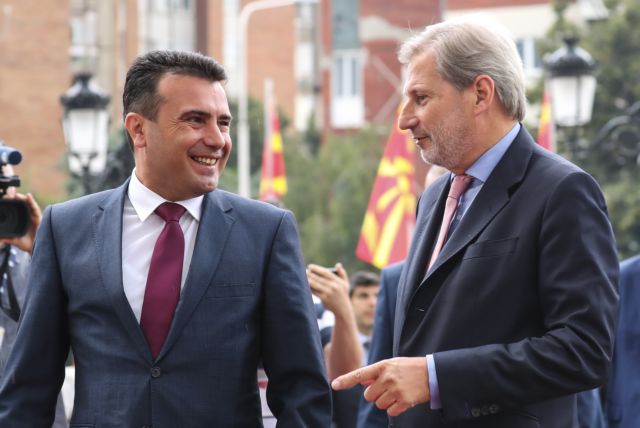
'Do you desire accession to the European Union and to Nato with the support of the agreement between Macedonia and Greece?' was the proposal tabled by Zaev
FYROM’s main opposition VMRO party leader, Hristijan Mickoski, walked out on a meeting of party leaders called by PM Zoran Zaev yesterday to discuss the referendum on the Greece-FYROM naming deal.
During the conference, Zaev informed party leaders on the possible phrasing of the question that will be put to voters, which will link approval of the agreement to Skopje’s accession to Nato and the EU.
“Do you desire accession to the European Union and to Nato with the support of the agreement between Macedonia and Greece?” was the proposal tabled by Zaev.
Zaev said after the meeting that all party leaders who remained until the end were in favour of the successful conduct of the referendum. He described Mickoski’s behaviour as irresponsible and offensive to all party leaders and to the citizens of FYROM.
New meeting today
Mickoski demanded that a new meeting be held with only the leaders of the country’s four large parties, and without the attendance of one MP from each party, as occurred yesterday.
“What is it that Mickoski does not want to say with everyone present and makes him demand limited attendance?” Zaev asked, even as he arranged a follow-up meeting today with fewer participants.
Zaev said that Mickoski will have yet another opportunity to prove that he supports membership in Nato and the EU, and of the citizens’ right to decide about the future of the country.
- Ολυμπιακός: Πρόβλημα με τον Ταϊρίκ Τζόουνς, θα υποβληθεί σε εξετάσεις (vid)
- Οι πρωτιές στη νέα Κεντρική Επιτροπή του ΠΑΣΟΚ – Ολοκληρώνεται η καταμέτρηση των ψηφοδελτίων
- Η πρώτη δικαίωση του Μπαρτζώκα σε μια χρονιά που όλοι περιμένουν την… τελευταία (vid)
- Πέθανε ο ηθοποιός Στέλιος Καλογερόπουλος
- Ο Χολ έκανε «πάρτι» στο ΟΑΚΑ
- Πώς αποκαλύφθηκε το θρίλερ στου Ζωγράφου με τις δύο νεκρές γυναίκες – Τι είπε στην απολογία του ο 54χρονος